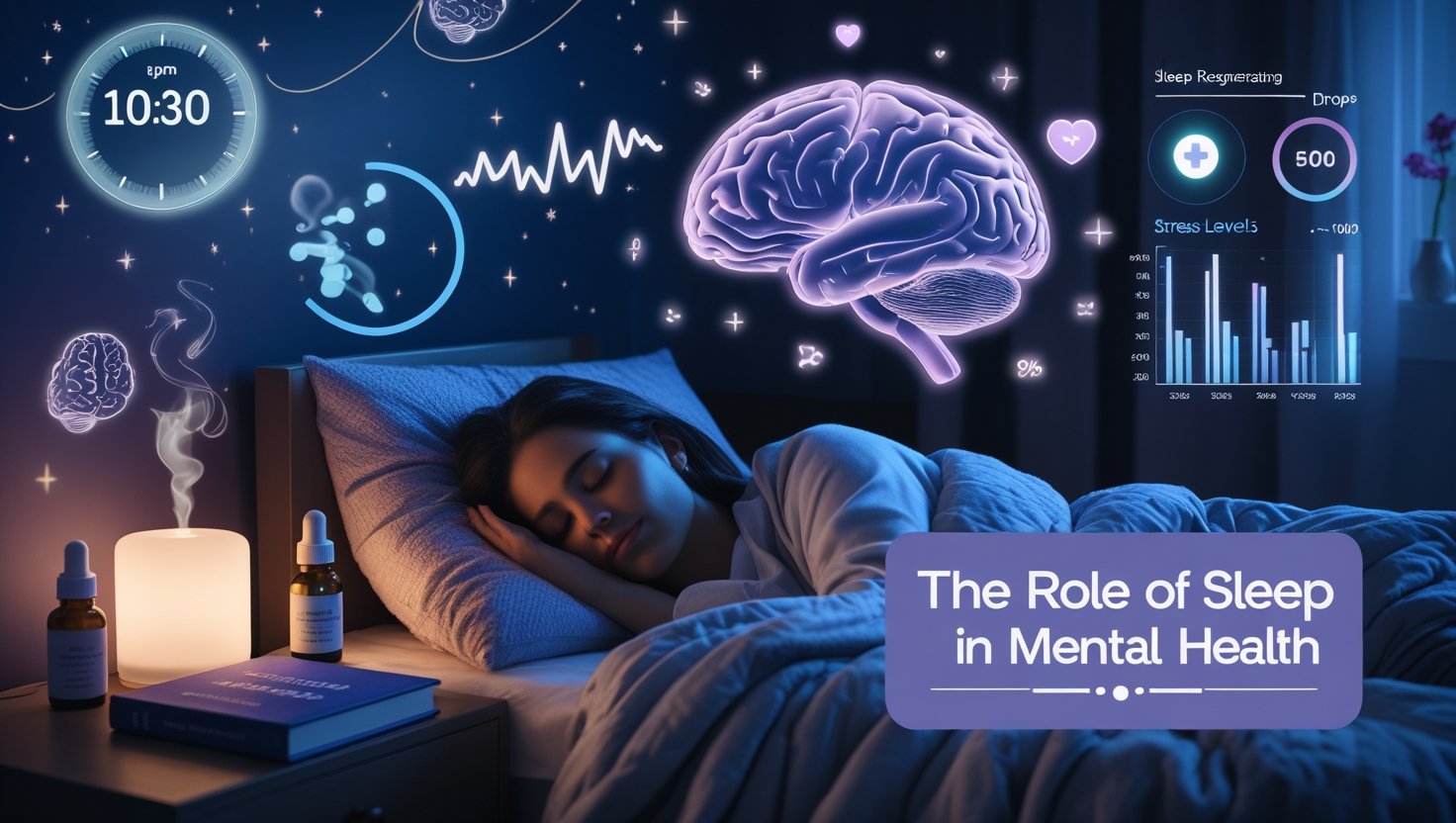
There is a deep connection between mental health and sleep, but often people ignore this relationship. During daily problems, stress, and routine pressure, we consider sleep as just a physical necessity, whereas in reality, it has a direct impact on our mental and emotional condition. When a person’s sleep is complete and completely peaceful, their brain works better, their mood remains good, and their stress level reduces. On the other hand, if sleep is not complete or is disturbed, it can lead to problems like anxiety, depression, and emotional imbalance.
Today, everyone’s lifestyle has become so busy and digital that people use their mobile or laptop for long hours, which disturbs their sleep cycle. This disturbance slowly damages the health of the brain. Sleep is not limited to just physical energy, but it also affects our decision-making, memory, and emotional reactions. When we have enough sleep, we feel more focused, calm, and productive.
In this blog, we will explore which parts of the brain are affected by sleep, what is the effect of sleep disorders on mental health, and how better sleep can improve our mental wellness. Good sleep is not just a comfort but a necessity for mental peace and a healthy life.
How Sleep Affects the Brain – Relationship between Memory, Mood, and Mental Function:
Sleep is nothing less than a recharge system for our brain. When we sleep, the brain organizes the memories of the past day, absorbs new ideas, and restores emotional balance. During sleep, the brain’s hippocampus, which is responsible for storing memories, becomes more active. If sleep is not complete, a person’s memory can weaken, new concepts can be difficult to understand, and decision-making can also be affected. Mood swings, irritability, and emotional reactions also increase.
When the brain is not relaxed, it overreacts to every small thing, leading to stress and anger. Good sleep also balances mood-related chemicals like dopamine and serotonin, which are essential for happiness and calmness. Lack of sleep directly harms cognitive functions like focus, alertness, and learning. This matters for people of all ages, whether students, professionals, or retirees. Quality sleep is essential for maintaining both brain health and emotional intelligence.
Sleep Disorders and Their Psychological Effects:
Sleep-related problems like insomnia, sleep apnea, and restless leg syndrome are not just a result of physical discomfort, but they also badly affect mental health. In insomnia, a person feels pain while sleeping or their sleep gets interrupted repeatedly. This condition often becomes a result of anxiety and depression, as the mind does not find peace. In sleep apnea, a person’s breathing stops repeatedly during sleep due to which fragments the sleep gets fragmented.
This condition gives rise to fatigue, confusion, and mood swings. If these disorders persist for a long time, the person gets mentally stressed, due to which he feels irritability, hopelessness and difficulty in concentration. All these conditions can lead to long-term psychological disorders. It is also important to treat sleep disorders and identify them so that the person can regain their mental stability. These problems are often due to lifestyle, diet, or stress, but their solution is also possible if they are identified in time and a proper therapy and rest schedule is followed.
Sleep Deprivation and Mental Health – Relationship between Depression, Anxiety, and Stress:
Sleep deprivation is a silent killer that slowly eats away at the health of the mind from within. When a person does not get proper and peaceful sleep for 6 to 8 hours daily, their brain feels overloaded. This overload further leads to depression and anxiety. When you do not get complete sleep, stress hormones like cortisol are released, due to which a person always feels tension and pressure. Often, such people always fall into anxiety, sadness, and negativity.
Their self-esteem gets low, even small things disturb them, and they are not able to concentrate on every task. Chronic sleep deprivation, i.e., not sleeping for long periods, gives rise to mental diseases. This condition not only affects mental health but also causes damage to physical health, like blood pressure, diabetes, and weakness of the immune system. Hence, it is important that every individual gives priority to his/her sleep, sleeps on time, takes breaks from digital devices, and takes care of sleep hygiene. Good sleep makes a person emotionally strong, mentally fresh, and stress-free.
The Sleep Cycle – REM vs. Deep Sleep Role in Emotional Healing:
Sleep is not a single stage, it occurs in different phases, of which the most important stages are REM (Rapid Eye Movement) and Deep Sleep. Deep sleep is the stage when the body is physically repaired, but REM sleep is the time when the brain processes emotions, stores memories, and dreams occur. Both these stages are very important for mental health. If REM sleep gets disrupted, then the person becomes a victim of emotional instability, his mood remains off, and he reacts to every small thing. In this way, a lack of deep sleep makes a person physically tired, which affects overall performance and concentration.
Emotional healing means processing old stress, traumas, or unpleasant thoughts and releasing them. The mind does this only when it gets proper and uninterrupted sleep. If the sleep cycle is disturbed, this natural emotional detox stops. Therefore, it is important that you fix your sleep schedule, avoid late-night scrolling, and maintain a proper bedtime routine so that you can get the benefits of both REM and deep sleep, and emotional healing can happen naturally.
Tips for Better Sleep – Easy ways to Healthy Sleep Hygiene:
Achieving better sleep is not difficult if you include some simple sleep hygiene habits in your routine. First of all, make it mandatory to sleep at a fixed time every day and wake up regularly, be it a weekend or a weekday; the discipline of timing improves the sleep cycle. Switch off the screens 1 hour before going to sleep at night, because the blue light of the mobile and TV wakes up the mind. Make the atmosphere of your bedroom relaxing dim light, low temperature, and silence helps in sleep. Avoid caffeine and sugary things at night, and have a light dinner. Be sure to do exercise or light physical activity during the day, but not right before going to sleep.
If there is too much stress or tension, lighten your mind with meditation, breathing exercises, or writing (journaling). Learn to relax your mind before bedtime. This is a signal that the body needs to rest. If you follow these simple ways, your sleep will automatically improve, and you will feel fresher and peaceful mentally. Good sleep is not a luxury, but a basic necessity; neglecting it is like compromising your mental health.
Conclusion:
Finally, it is very important to understand that sleep is not just a means to relieve physical fatigue; rather, it is the first and most important step to mental peace and stability. In today’s busy and stressful life, we sacrifice sleep, but as a result, we suffer emotional breakdown, anxiety, and depression. Till the time we do not give importance to our sleep, our mental health can never be completely stable. Good sleep keeps a person in a good mood, improves focus, and helps them face every difficulty with more courage.
This blog not only tells you the scientific aspects of sleep, but also makes you understand that if you really want to stay mentally healthy, the first thing you need to do is improve your way of sleeping. By incorporating a little discipline and sleep-friendly habits in your lifestyle, you can avoid many major psychological problems. Ignoring sleep is like ignoring your mental health, and this is not wisdom. From today itself, make a peaceful sleep routine for yourself, so that every day of life starts with new energy and positivity.
FAQs:
1. Why is sleep important for mental health?
Sleep plays a critical role in maintaining mental well-being. It helps regulate mood, reduce stress, and improve memory and decision-making. Without quality sleep, a person may experience anxiety, depression, and emotional imbalance, affecting both personal and professional life.
2. How does lack of sleep affect the brain?
When you don’t sleep properly, the brain struggles to process emotions, store memories, and manage reactions. This leads to mood swings, poor focus, irritability, and even long-term mental disorders like chronic anxiety and depression.
3. What are common sleep disorders that harm mental health?
Conditions like insomnia, sleep apnea, and restless leg syndrome disturb sleep quality and increase the risk of mental issues. These disorders lead to fatigue, confusion, low concentration, and emotional instability if left untreated.
4. What is the difference between REM sleep and deep sleep?
REM sleep mainly helps in emotional processing and memory storage, while deep sleep repairs the body physically. Both are essential; missing either can cause emotional issues, poor brain function, and low energy levels during the day.
5. How can I improve my sleep quality naturally?
Follow a regular sleep schedule, avoid screens before bed, limit caffeine intake, and keep your bedroom cool and quiet. Practicing relaxation techniques like meditation or journaling before sleep can also help achieve better and deeper rest.